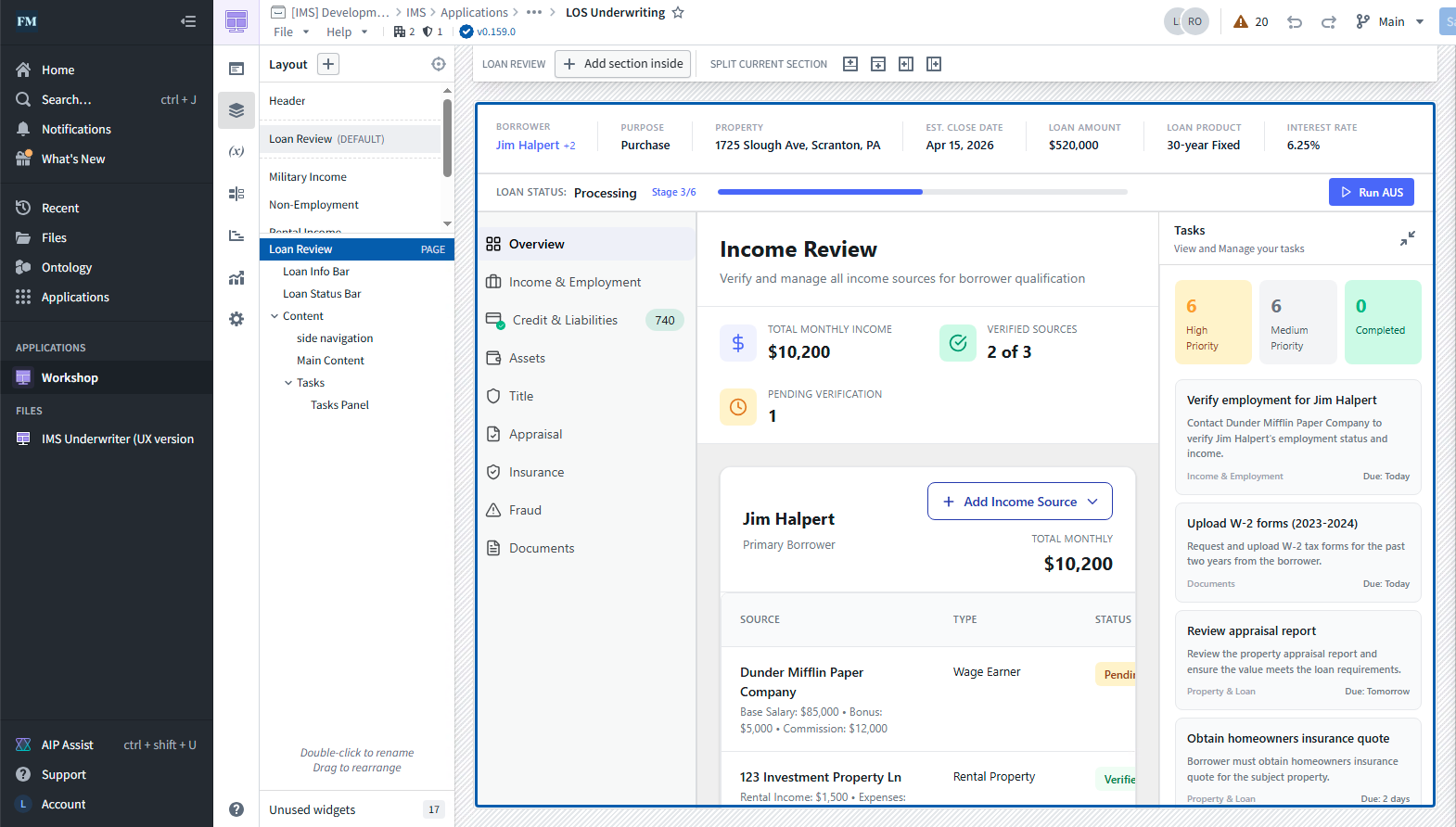
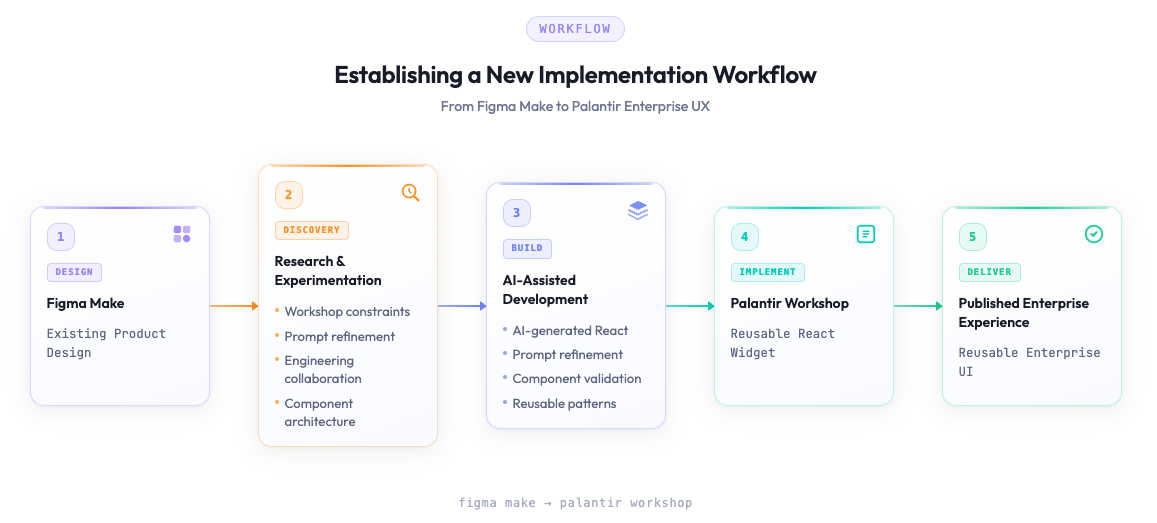
Establishing a New Implementation Workflow
Researching and establishing a repeatable workflow for implementing Figma designs as custom React widgets in a Palantir framework.
The Challenge
Although the application had already been designed in Figma, there was no established process for implementing those designs inside Palantir Workshop. The platform relied on custom React widgets, but there was no proven workflow for translating AI-generated code into components that Workshop could successfully render.
The Approach
As the product designer, I partnered closely with an engineer to research how Figma, AI-assisted code generation, React, and Palantir Workshop could work together. Through continuous experimentation, we refined prompts, component structures, and implementation patterns until we established a repeatable workflow for building custom widgets.
The Breakthrough
Because no established implementation process existed, much of the work involved experimentation, documenting what succeeded, and eliminating approaches that failed until a reliable workflow emerged.
The Results
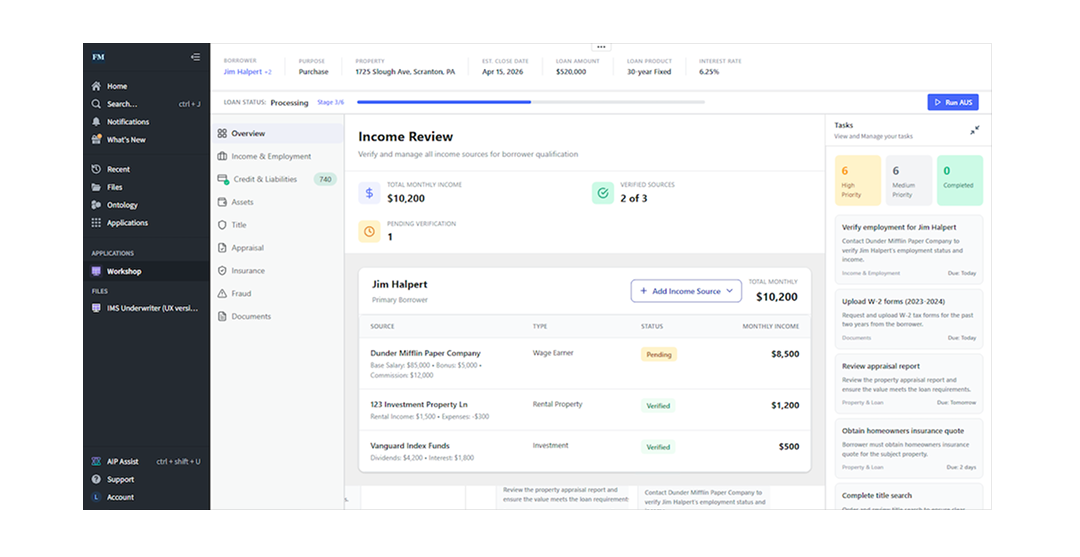
This work established a repeatable implementation approach for bringing Figma designs into Palantir Workshop as reusable React widgets. The process reduced uncertainty for future custom widget development and created a stronger bridge between design, AI-assisted development, and engineering implementation.