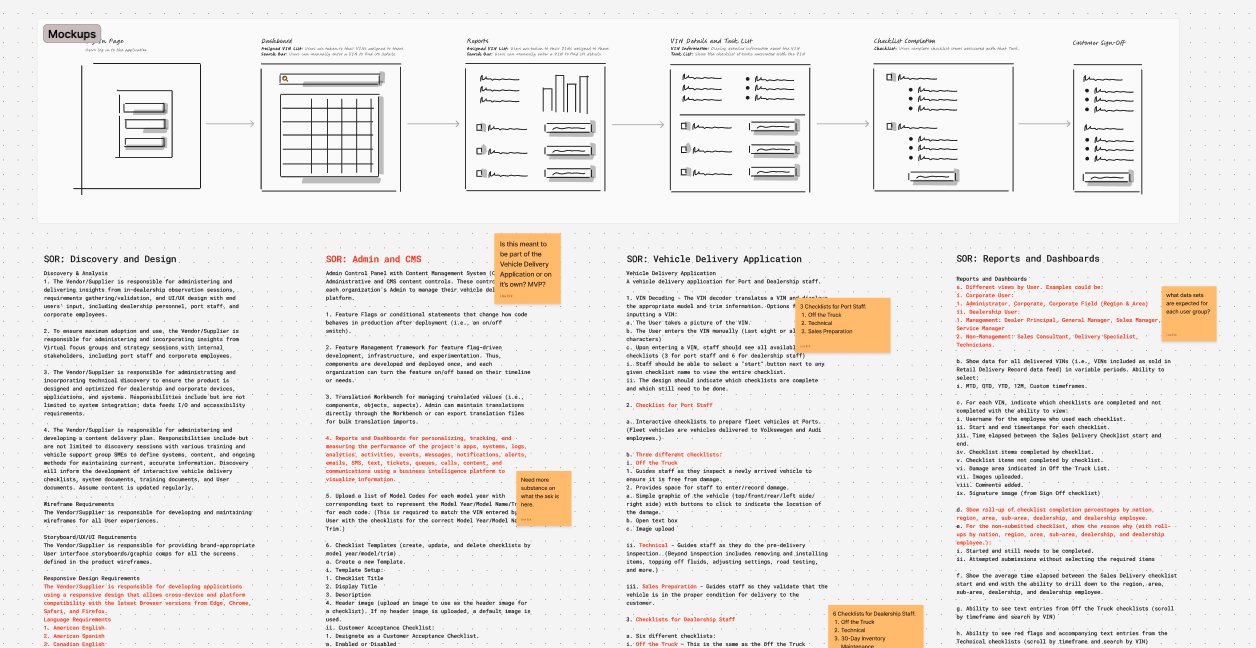
Research findings were organized into user stories, workflows, and functional requirements that guided product planning and design.
Conducting field research and translating dealership workflows into a consistent digital delivery experience.
The Challenge
Understanding how vehicles are delivered—not just how software should work.
Vehicle delivery is one of the most important moments in the ownership journey, yet dealership processes varied widely. Each dealership developed its own practices for preparing vehicles, documenting inspections, and introducing customers to their new vehicle. The goal was to understand these real-world workflows and identify opportunities to create a more consistent digital experience without disrupting how dealerships operated.
Understanding the Dealership Experience
Learning directly from dealership teams.
Rather than beginning with interface design, I visited Volkswagen and Audi dealerships to observe how vehicles moved from arrival through customer delivery. I worked alongside dealership staff to understand their responsibilities, identify pain points, and capture opportunities for improving the experience before any detailed design work began.
Research Activities
- Visited Volkswagen and Audi dealerships.
- Observed vehicle preparation and customer delivery workflows.
- Interviewed sales consultants, technicians, and dealership managers.
- Documented workflow variations and operational pain points.
- Collected iterative feedback throughout wireframing and design.
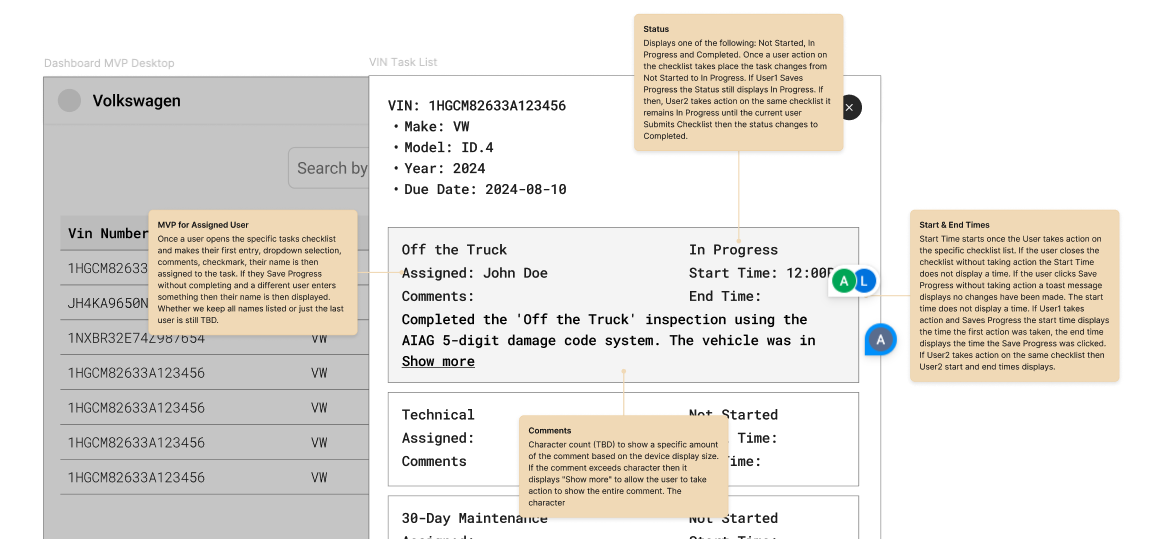
Interaction notes documented business rules, validation, and expected system behavior, reducing ambiguity during implementation.
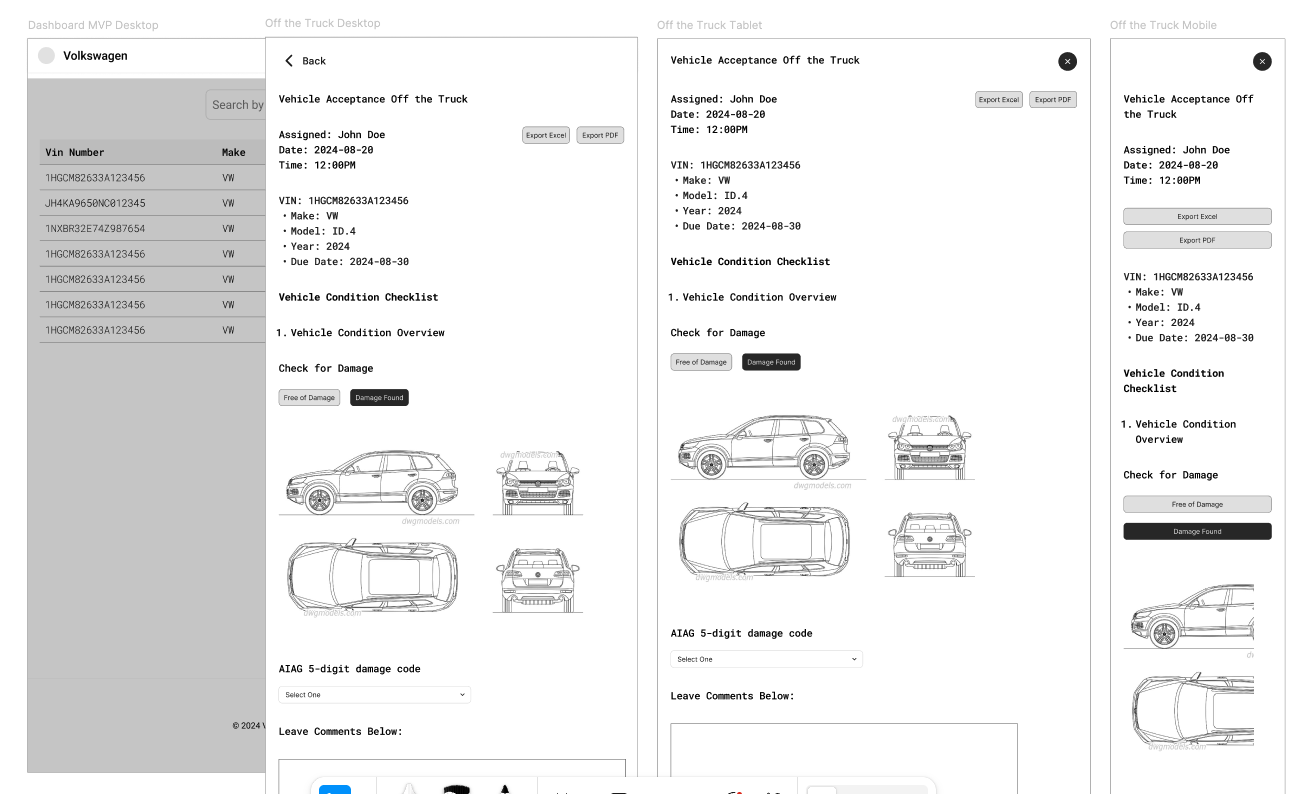
Key delivery workflows were explored across desktop, tablet, and mobile to support dealership staff wherever the work occurred.
Designing for Multiple Devices
Dealership employees move throughout the showroom, service area, and vehicle lot during the delivery process. The experience was designed to adapt across desktop, tablet, and mobile devices while maintaining a consistent workflow.
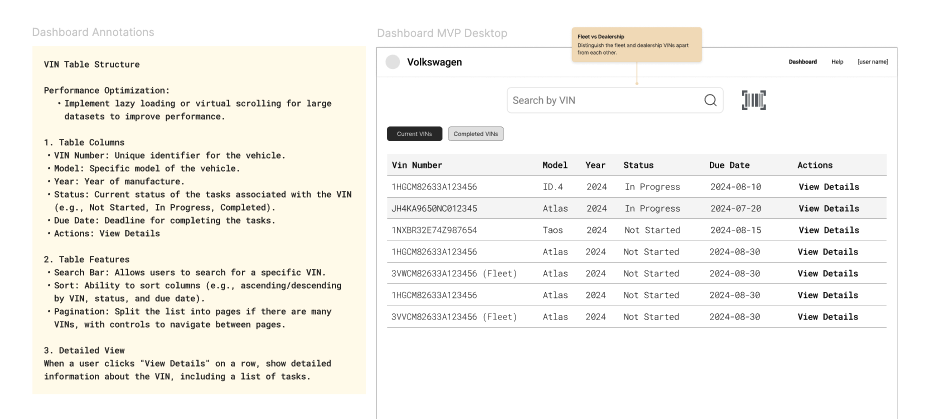
Annotated dashboard concepts defined table behavior, navigation, and performance considerations before visual design began.
Bringing the Experience to Life
Working closely with a UI designer, the interaction models and workflow documentation evolved into the final visual design while maintaining the intent established through research.
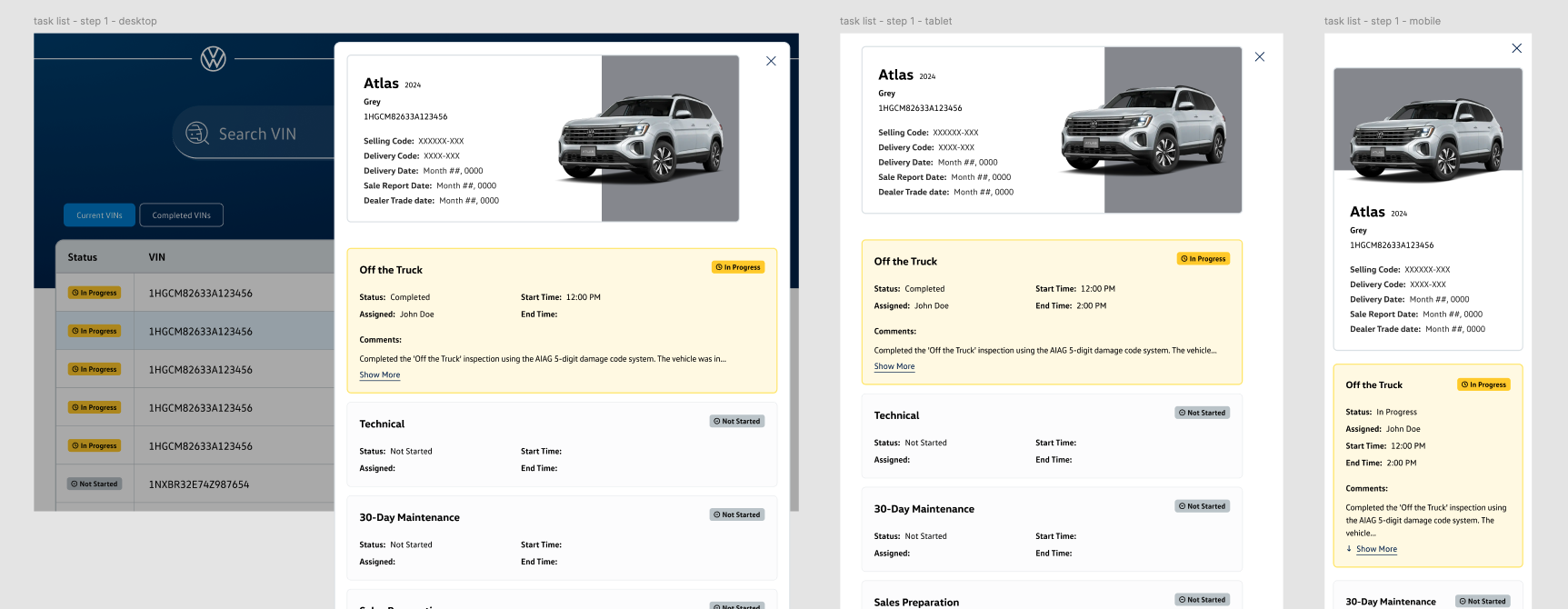
The final interface built upon the workflows, interaction patterns, and requirements established during research and wireframing. Visual design by UI Design team.
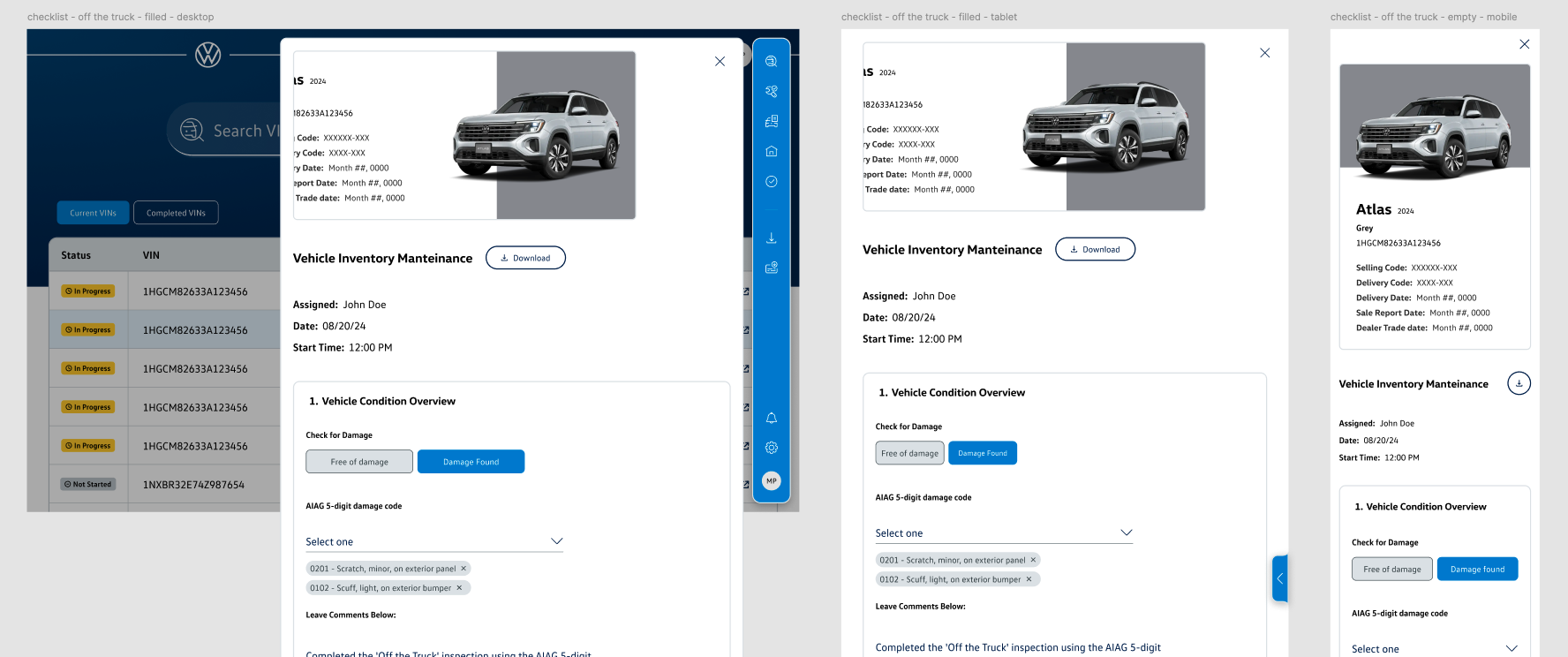
The final interface translated the documented workflows into a consistent experience across desktop, tablet, and mobile while preserving the operational needs identified during field research.
Outcome
By grounding the design in real dealership workflows, the project established a consistent framework for vehicle delivery while accommodating differences in dealership operations. The resulting design reduced ambiguity for both users and developers by translating research into documented workflows, interaction models, and implementation-ready specifications.